How Australia's system works · Episode 4
Most of what this regime asks of you, day to day, is quiet record-keeping. But a few things you must actively report to AUSTRAC. Here they are — on one map.
Three reports, three triggers
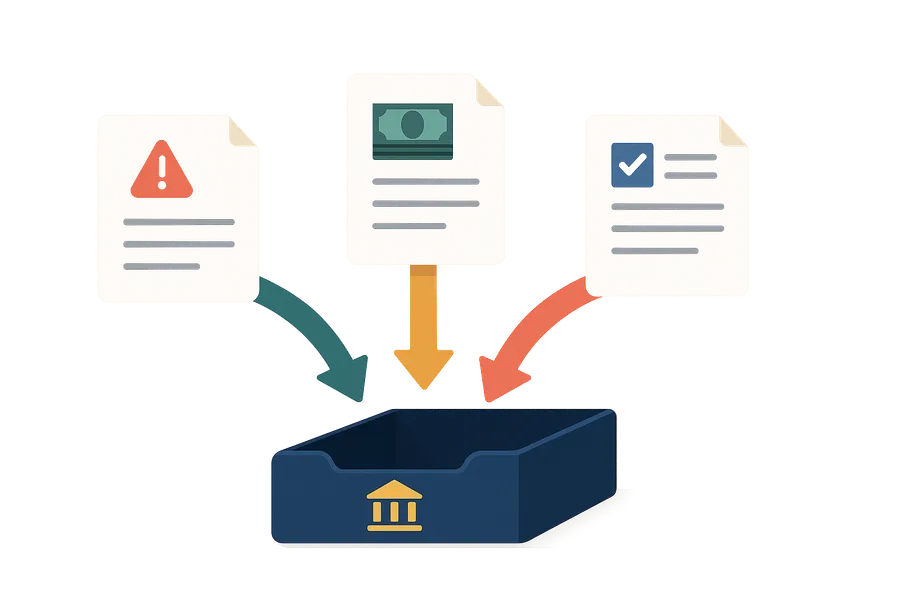
There are three you will meet most. A suspicious matter report — when something doesn't add up. A threshold transaction report — for large cash. And a compliance report — your annual summary. Different triggers, different clocks, all to AUSTRAC.
When suspicion arises
(1) A suspicious matter reporting obligation arises for a reporting entity in relation to a person (the first person) if, at a particular time (the relevant time): (a) the reporting entity commences to provide, or proposes to provide, a designated service to the first person; …
s 41 — reports of suspicious matters
Anti-Money Laundering and Counter-Terrorism Financing Act 2006 · s 41(1) (extract) · C2026C00220, printed page 146When cash crosses the line
(2) The reporting entity must, within 10 business days after the day on which the transaction takes place, give the AUSTRAC CEO a report of the transaction.
s 43(2) — threshold transactions
Anti-Money Laundering and Counter-Terrorism Financing Act 2006 · s 43(2) · C2026C00220, printed page 150Know your clocks

That is the pattern across all three: know what triggers the report, and know how long you have. Get those two right, and reporting stops being scary — it is just a calendar.
Three reports. Three triggers. Three clocks. Learn them once, and you'll know exactly what AUSTRAC expects — and when.